
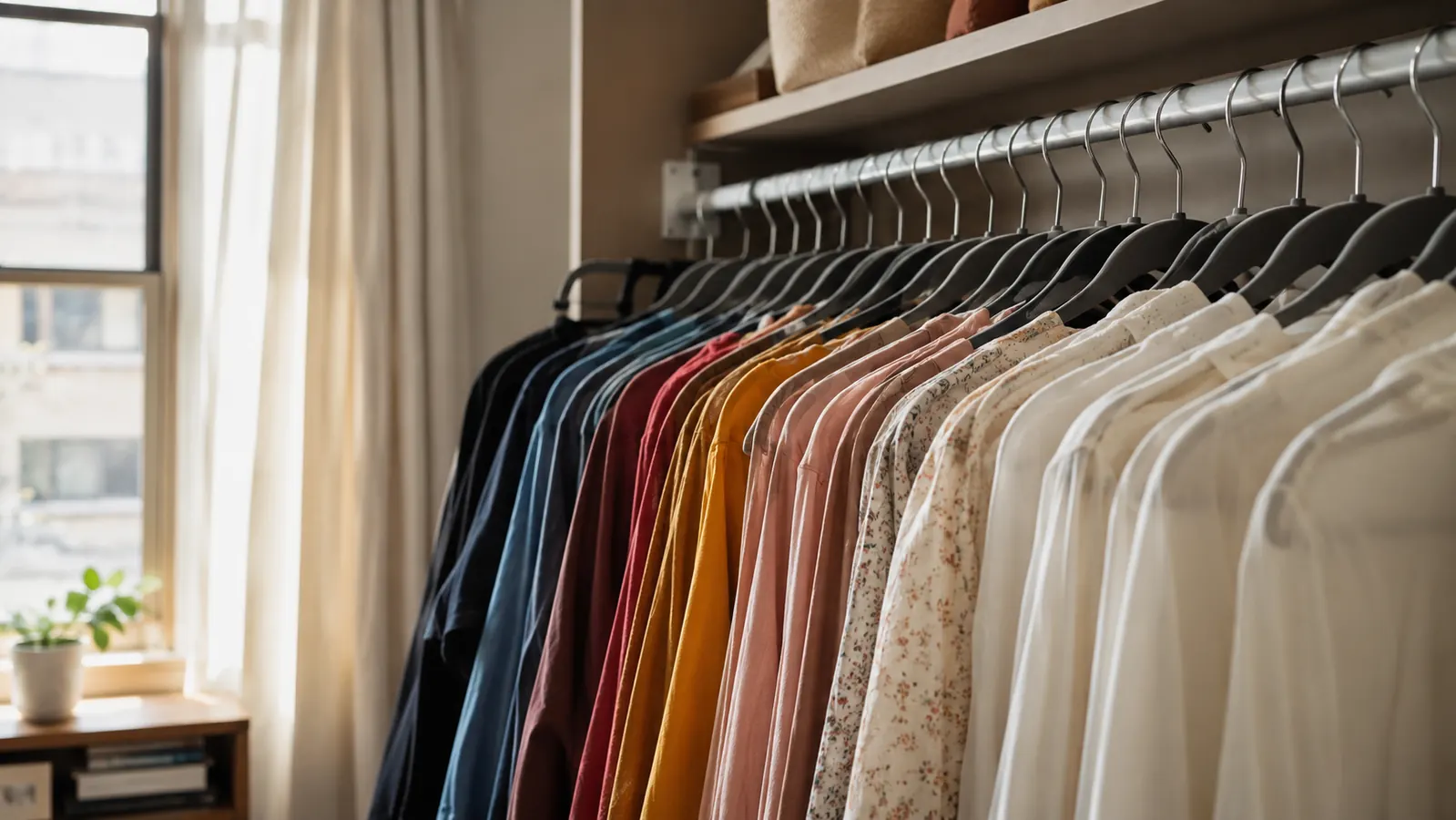
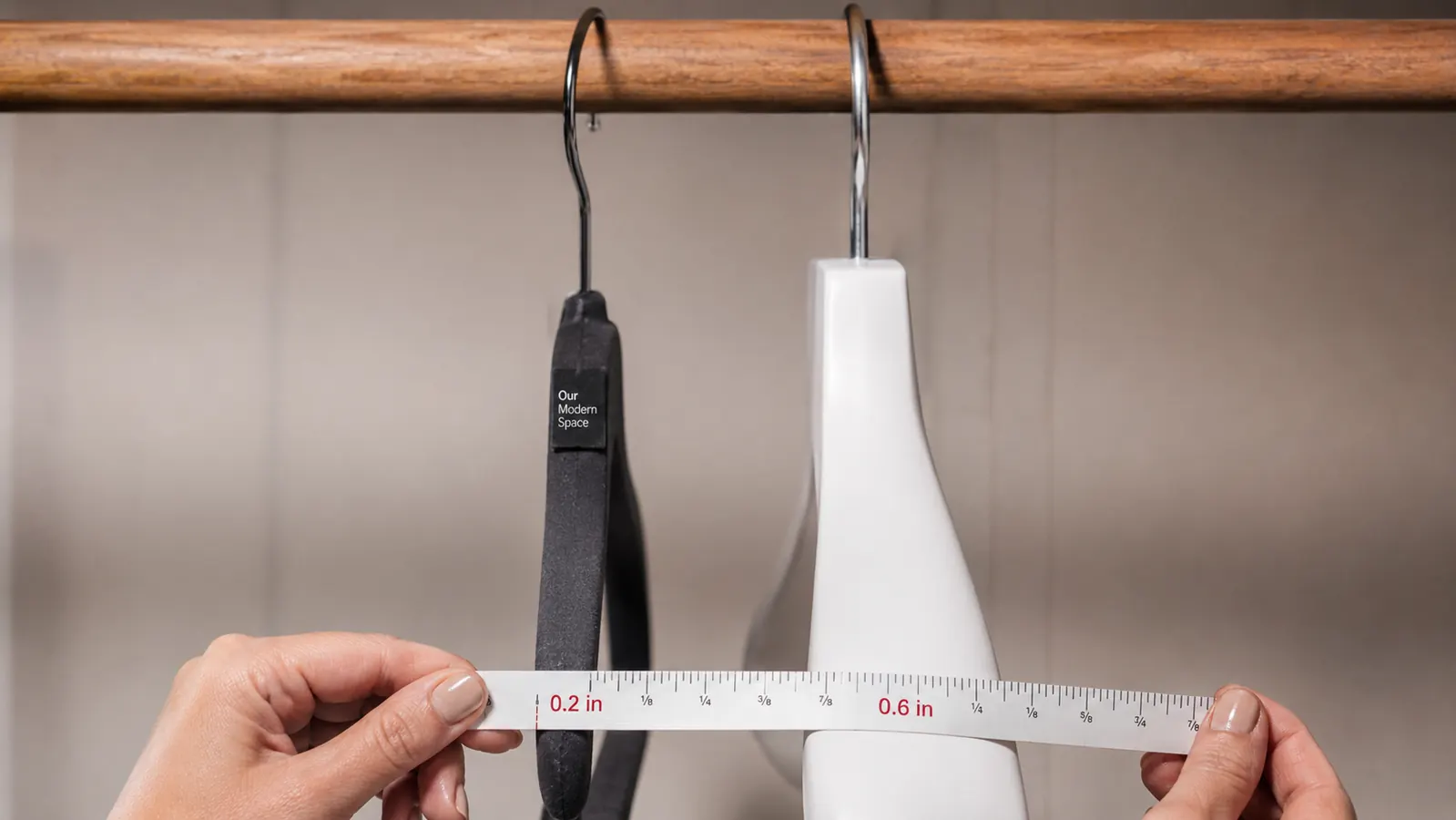
If you have ever measured your closet rod and realized you cannot fit another single item without something falling off, you have already discovered the central problem with plastic hangers. They are thick. A standard white plastic hanger from the dry cleaner runs about 0.6 inches at the shoulder. A velvet hanger runs about 0.2 inches. On a 36-inch rod, that gap adds up to roughly 15 extra hangers per linear foot. That is not a marginal difference. That is the difference between cramming your shirts sideways and actually being able to see what you own.
That said, plastic hangers are not all bad. They are free if you keep the ones from dry cleaning. They are durable on heavy items like jeans and hoodies. And for certain garments, the non-stick surface is actually a feature. The question is not which type is universally better. It is which type solves the specific problems in your specific closet. That is what this comparison is actually about.
| Our Modern Space Velvet Hangers | Standard Plastic Hangers | |
|---|---|---|
| Hanger Thickness | 0.2 in (slim profile) | 0.5-0.7 in (bulky, varies by brand) |
| Grip on Slippery Fabrics | Excellent , velvet surface holds silk, satin, spaghetti straps without clips | Poor , smooth surface causes frequent slippage on fine fabrics |
| Price Per Unit | Very economical, sold in 100-pack | Free from dry cleaner or very cheap multipacks |
| Rod Capacity Gain vs Plastic | Roughly 3x more hangers in the same rod space | Baseline |
| Shoulder Bump / Distortion Risk | Low , flat profile avoids shoulder bumps on knitwear | Medium-High , narrow plastic tips create bumps in sweaters and knits |
| Rotating Hook | Yes , 360-degree swivel on Our Modern Space model | Fixed on most standard models |
| Weight Limit | Rated for 10 lbs; handles shirts, dresses, light jackets | Rated for 10-20 lbs depending on model; handles heavy jeans and coats |
| Durability | Good , flocking can shed minimally in first week, then settles | Good , plastic cracks over time but lasts years under normal use |
| Renter-Friendly | Yes , no installation, no wall damage | Yes , no installation, no wall damage |
| Velvet Shedding Concern | Minimal after first few days; no staining on garments in testing | N/A |
Where Velvet Hangers Win
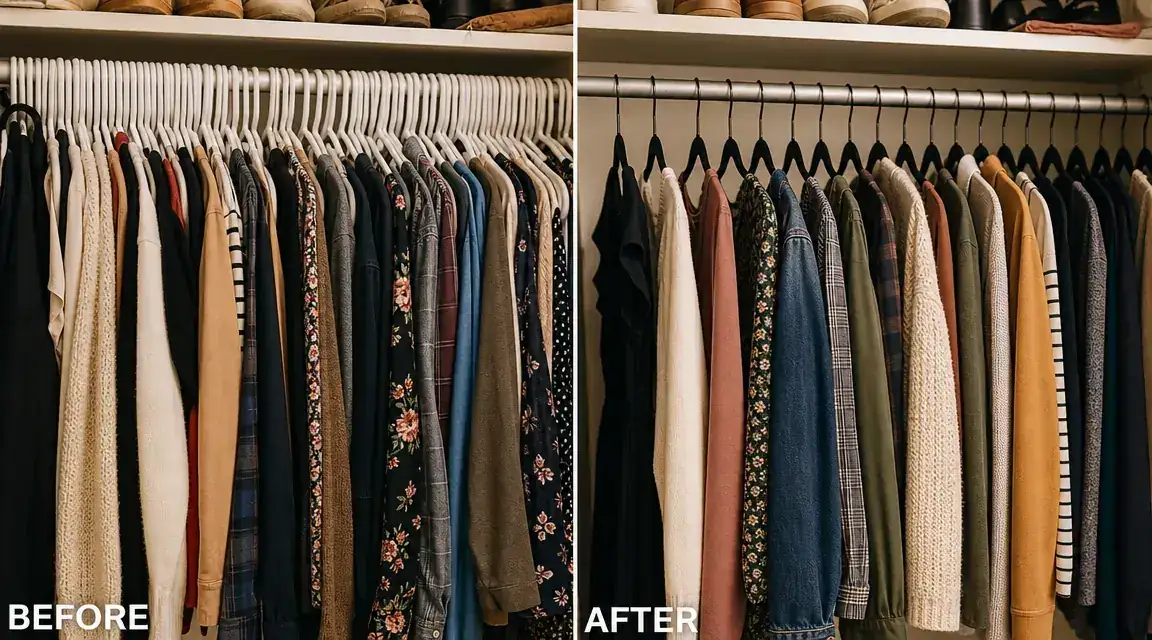
The single biggest win for velvet hangers is rod capacity. On a 36-inch closet rod in a standard apartment bedroom, I fit 28 shirts on plastic hangers before things got too tight to slide apart. After switching to Our Modern Space velvet hangers, the same rod holds 47 shirts with room to flip through them easily. That is not an exaggeration. Slim hangers at 0.2 inches versus bulky ones at 0.6 inches is a 3-to-1 ratio, and in a small closet that math matters more than almost any other organizing move you can make without drilling or renting a storage unit.
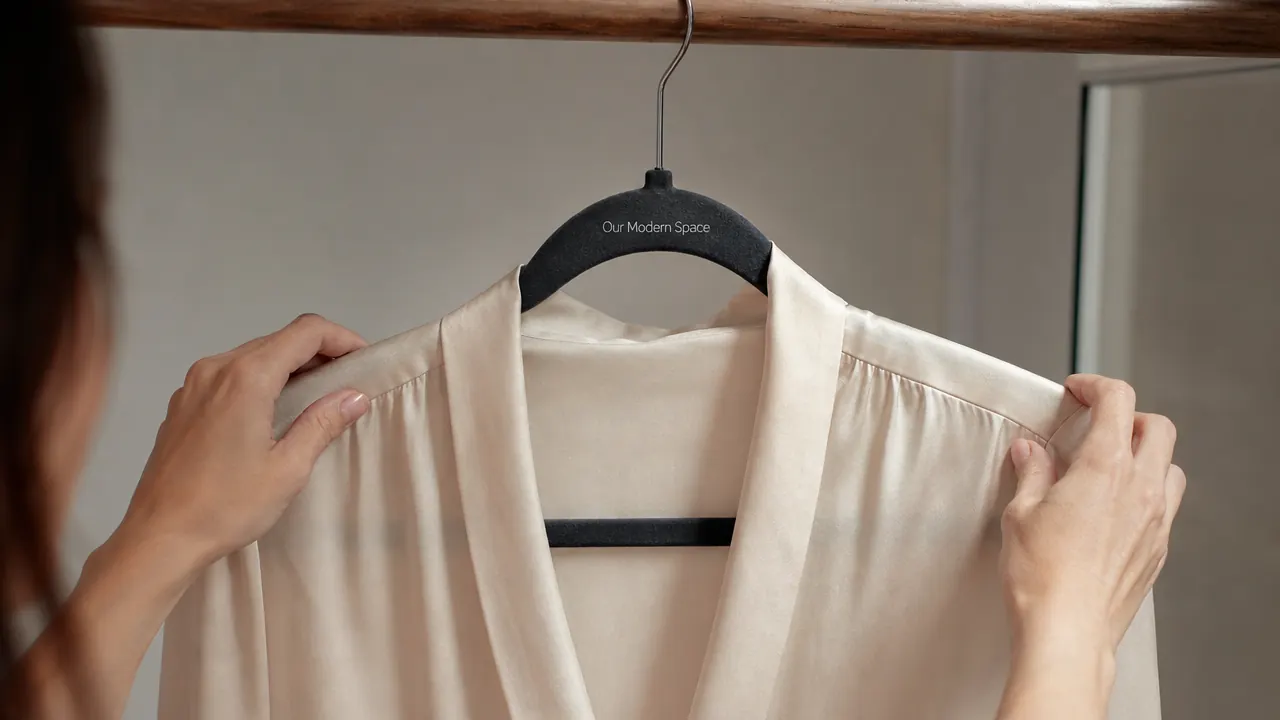
The second big win is grip. If you own anything in silk, satin, or a wide-neck knit, you know the plastic-hanger problem. You hang a blouse, walk away, come back, and it is on the floor. Velvet grips fabric the same way a soft lint roller grips lint. The texture catches fine fabrics and holds them without clips, without pins, without anything else. I hang my satin camisoles directly on velvet hangers and they stay. On plastic, they slide off within a few hours unless I am extremely careful about centering them.
Shoulder protection is the third area where velvet pulls ahead for most wardrobes. Standard plastic hanger tips are narrow and rounded, and they push up into knitwear shoulders creating the classic bump that ruins the drape. The flat, shouldered profile of a velvet hanger distributes weight more evenly across the shoulder seam. After six months of use, none of my knit sweaters have developed the bump. Compared to plastic, that is a meaningful difference for anyone who owns cashmere, fine wool, or ponte fabric.
Where Plastic Hangers Still Win
Heavy items. A pair of jeans, especially rigid denim, benefits from a heavier hanger with a wider bar. Velvet hangers are rated at about 10 pounds and most models have a thin bar without a trouser notch designed for weight-bearing use. Stiff jeans tend to slide off the thin bar over time. Plastic clip-style trouser hangers, or the thicker tubular plastic style designed for pants, outperform velvet for denim and heavy trousers. I keep about 10 heavy-duty plastic hangers in my closet exclusively for jeans and thick joggers.
Cost is the other place plastic wins, for a specific type of buyer. If you are outfitting a temporary space, a seasonal storage closet, or a guest room where garments sit for months without being touched, free plastic hangers from dry cleaning runs do the job and cost nothing. There is no reason to spend on velvet hangers for a bin of off-season winter coats in a storage closet. Velvet is optimized for the closet you open every day.
Ready to triple your rod capacity? Our Modern Space velvet hangers come in a 100-pack.
Rated 4.7 stars across 1,056 reviews. At a low per-unit cost for the 100-pack, the math works out faster than most people expect. These are the ones I switched my entire main closet to.
Amazon Check Today's Price on Amazon →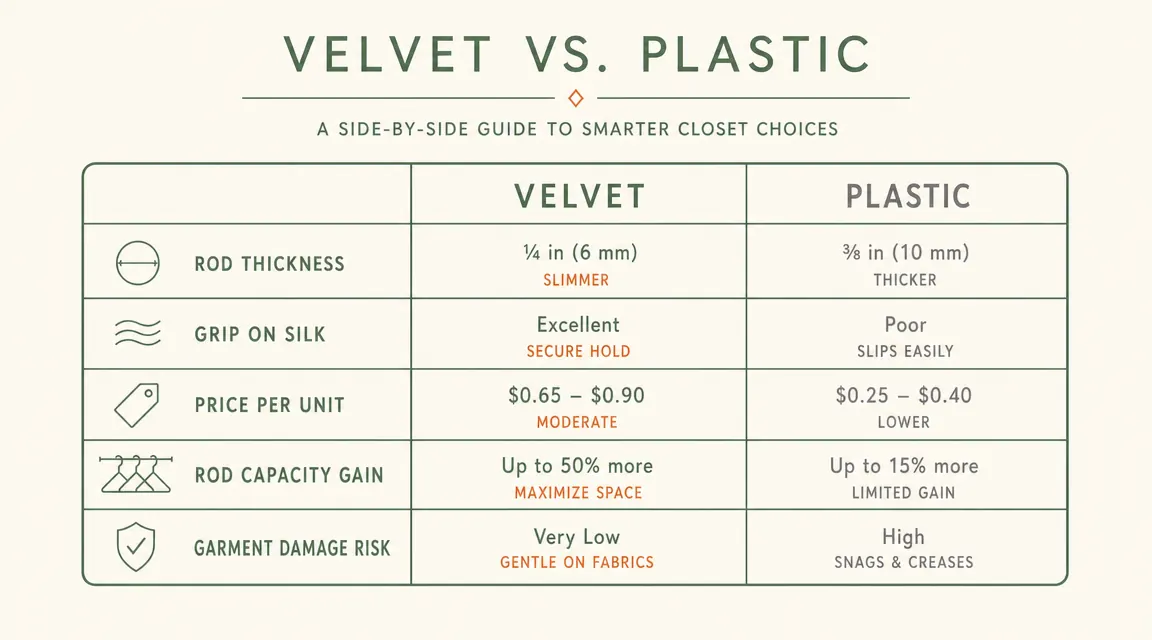
The Velvet Shedding Question
Before someone brings it up in the comments: yes, new velvet hangers shed a small amount of fuzz in the first week. I noticed a faint gray dusting on the rod and shelf below after the first few days with Our Modern Space hangers. It settled within five to seven days and has not recurred since. I checked every garment carefully and found no staining or transfer onto fabric. If you have very light-colored or white items, you could wipe the hangers with a damp cloth before hanging anything on them, which removes most of the loose surface flock immediately.
The shedding question is worth taking seriously because the internet has a lot of one-star reviews about it. Most of those reviews were written in the first three days of use. The fuzz is real. It is also temporary. I would not return the hangers over it, and I did not, but it is fair to mention so nobody is surprised.
On a 36-inch rod, switching from plastic to slim velvet hangers added 19 shirts worth of capacity without moving a single shelf or bracket. That is the kind of before-and-after that does not require a renovation.
The Rotating Hook Actually Matters
Our Modern Space includes a 360-degree rotating hook on every hanger in the 100-pack. This is not a gimmick. If your closet rod runs perpendicular to the wall, you can hang garments facing either direction without fighting the hook. More practically, it makes hanging items one-handed easier, which matters when you are putting laundry away quickly. Cheaper velvet hanger sets skip this and use a fixed hook, which means you have to orient every hanger the same way or they bind on the rod. The rotating hook is a small detail that becomes noticeable after a few weeks of daily use.
It also helps when you use the cascade trick where you link hangers together with a small chain or S-hook to hang multiple garments vertically. A rotating hook allows the bottom hanger to angle forward when you pull it, which plastic fixed-hook hangers cannot do. For anyone doing cascading in a very tight closet, this is a real functional advantage.
Which Garments Go on Which Hanger
My actual breakdown after running both types in the same closet: velvet hangers for dress shirts, blouses, satin and silk items, dresses, blazers, light cardigans, and anything with a wide or delicate neckline. Plastic hangers for stiff jeans, heavy denim jackets, winter coats, and anything stored long-term out of season. That means roughly 80 percent of my active closet is on velvet and about 20 percent stays on specialty plastic hangers designed for weight.
One category worth flagging: very stretchy jersey knit dresses. The grip on velvet is so strong that if you hang a bias-cut jersey dress for weeks, the fabric can develop subtle stretch marks at the shoulder where it grips. For very stretchy, delicate jersey pieces I either fold them on a shelf or use a wider-shouldered wooden hanger. This is not a reason to avoid velvet, but it is a nuance worth knowing if your wardrobe leans heavily toward athletic-style stretch fabrics.
Who Should Buy Which
Switch to velvet hangers if: your closet rod is packed so tightly that you cannot slide garments apart to see what you own, you have frequent slippage issues with fine fabrics, or you have been meaning to do a closet reset for a year and keep putting it off. A 100-pack of slim velvet hangers is the kind of purchase that forces the reset to actually happen because you have to take everything off the rod to swap the hangers anyway. People who do that reset consistently tell me they feel more put-together within a week because they can find things.
Stick with plastic hangers if: you are outfitting storage space rather than your daily-use closet, your main clothing items are heavy denim or outerwear that needs structural support, or you are genuinely cost-constrained and have access to free dry-cleaning hangers. There is no shame in the plastic hanger for the right application. The mistake most people make is using plastic in their active wardrobe closet where space is tight and fine fabrics slip, and then assuming the closet is just too small to organize.
Our Modern Space comes in a 100-pack at an affordable per-hanger price. That covers an average apartment bedroom closet in one order.
4.7 stars, 1,056 reviews, rotating hook on every hanger. If you are doing the full swap, the 100-pack is the right quantity for a standard single-rod bedroom closet.
Amazon Check Today's Price on Amazon →