
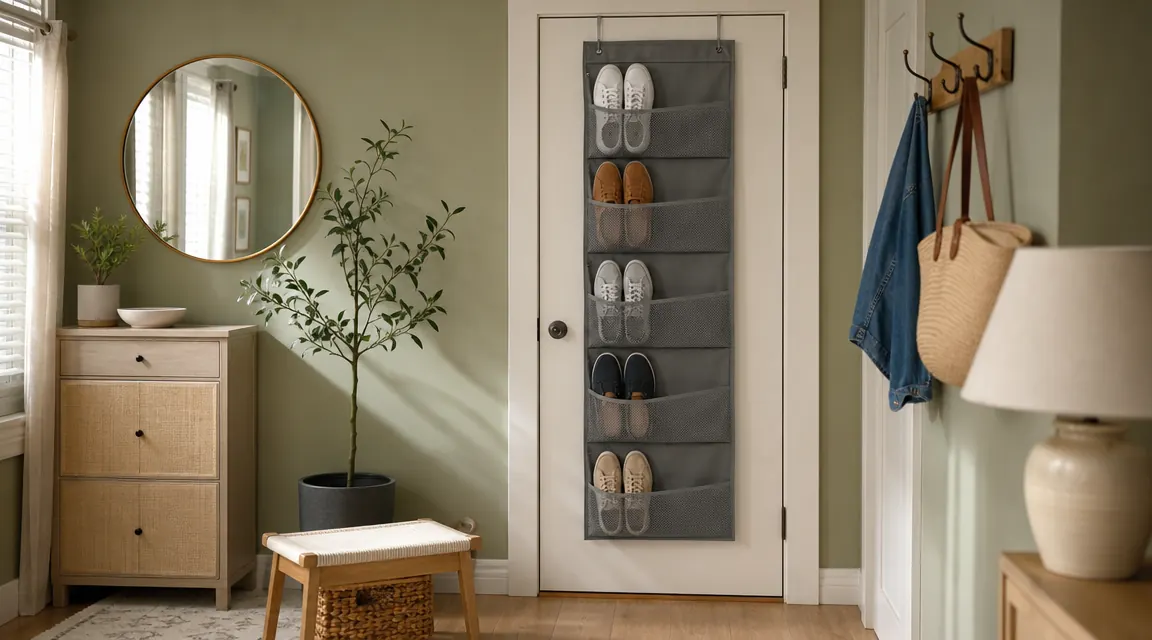
Two types of hanging shoe storage, one small entryway. If you are staring at a shoe pile by the front door and trying to decide which organizer actually fixes it, here is the short answer: the over-door shoe organizer wins for most renters, most of the time. It uses the back of a door you already own, holds 12 to 24 pairs without touching the floor, and the Amazon Basics version is very affordable. The hanging shelf organizer is not bad, but it requires a closet rod inside the entryway, which many apartments simply do not have. Read on for the full breakdown.
I have used both types across three different apartments. My current place is 680 square feet with a shallow coat closet just inside the door. The over-door organizer lives on the back of that closet door. In a previous unit with no entryway closet at all, I tested a hanging shelf organizer on the bedroom closet rod instead. They solve slightly different problems, and the wrong pick is a real pain to live with.
| Feature | Amazon Basics Over-Door (Left) | Hanging Shelf Organizer (Right) |
|---|---|---|
| Price | Check today's price on Amazon | Budget to mid-range depending on tier count |
| Capacity | 24 mesh pockets, fits up to 24 pairs of flats or 12 pairs of bulkier sneakers | Typically 6 to 8 shelves, 2 to 3 pairs per shelf = 12 to 24 pairs |
| Mounting method | Two metal hooks loop over any standard door top (no hardware, no drilling) | Hangs from a closet rod via a looped strap or hook bar |
| Door required? | Yes, any interior door works including closet doors and bedroom doors | No door required, but a closet rod is required |
| Weight limit | Up to 25 lbs total distributed across all pockets | Varies; fabric models typically 20 to 30 lbs, metal-frame models up to 50 lbs |
| Install time | Under 60 seconds | 2 to 5 minutes, may require rod readjustment |
| Renter safe? | Completely renter safe, no marks on door or wall | Completely renter safe, uses existing rod |
| Footprint | Zero floor footprint, lives entirely on the door | Zero floor footprint, lives in the closet |
| Shoe type limitations | Pockets are 4.5 inches wide, fits flats and low-top sneakers; tall boots do not fit | Shelves accommodate almost any shoe type including knee-high boots if the shelf gap is wide enough |
| Visibility | Open mesh, everything visible at a glance | Open shelves, visible but less organized-looking |
| Portability | Comes down in 5 seconds, folds flat, moves to any door | Comes down in 30 seconds, stores on the rod elsewhere |
Where the Amazon Basics Over-Door Organizer Wins
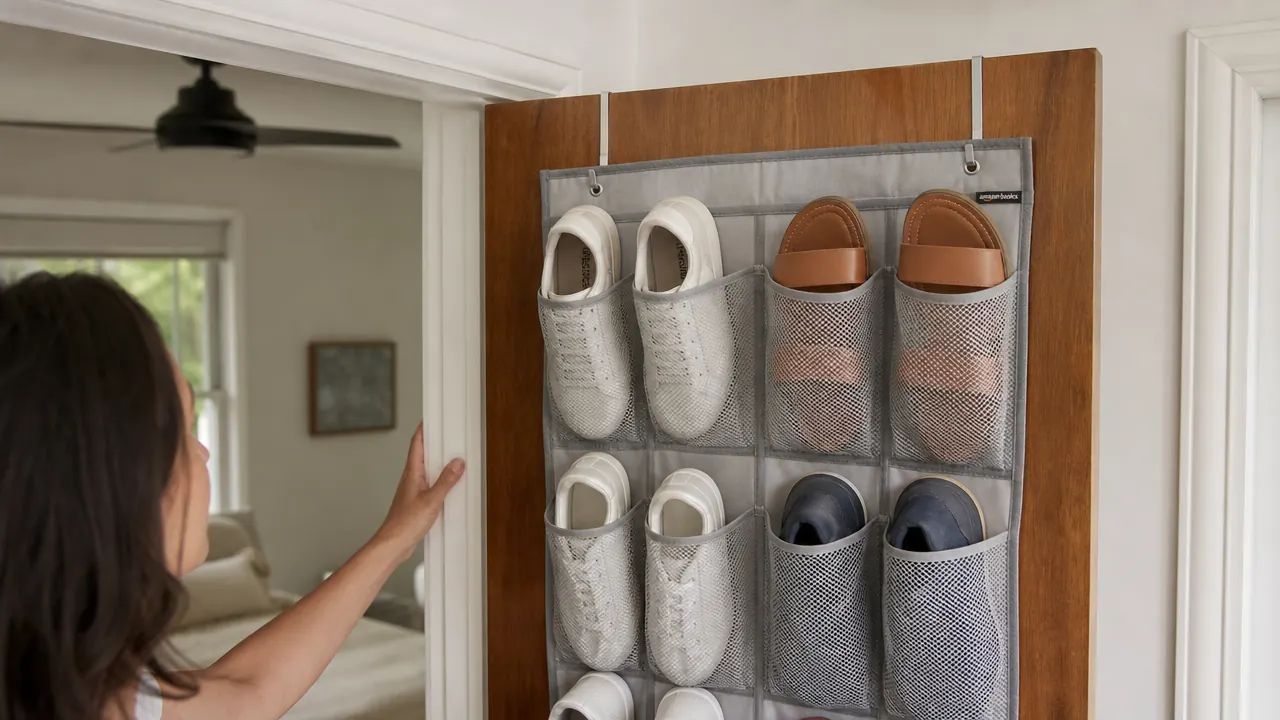
The over-door organizer wins on accessibility and speed of use. You do not need a closet at all, just a door. The back of a coat closet door, a bathroom door, or even a bedroom door that faces the hallway all work equally well. The two metal hooks slide over the top of the door and stay in place through normal opening and closing. I have moved this organizer six times across three apartments and it has never scratched a door or left a mark. The hooks are coated, not bare metal.
The 24-pocket count is the bigger deal than it looks. Each row of pockets holds two shoes side by side, which means 24 pockets handles up to 12 complete pairs. In practice, I use the top two rows for flats I grab every day, the middle rows for casual sneakers, and the bottom rows for shoes I need but do not wear weekly. The mesh pockets are open at the top so you can dump a shoe in quickly and the ventilation keeps odor down. At a budget price it is the cheapest usable shoe organizer on Amazon, and I have not found anything that beats it at this price point. See the full long-term write-up at the Amazon Basics shoe organizer review for two years of use details.
Where the Hanging Shelf Organizer Wins
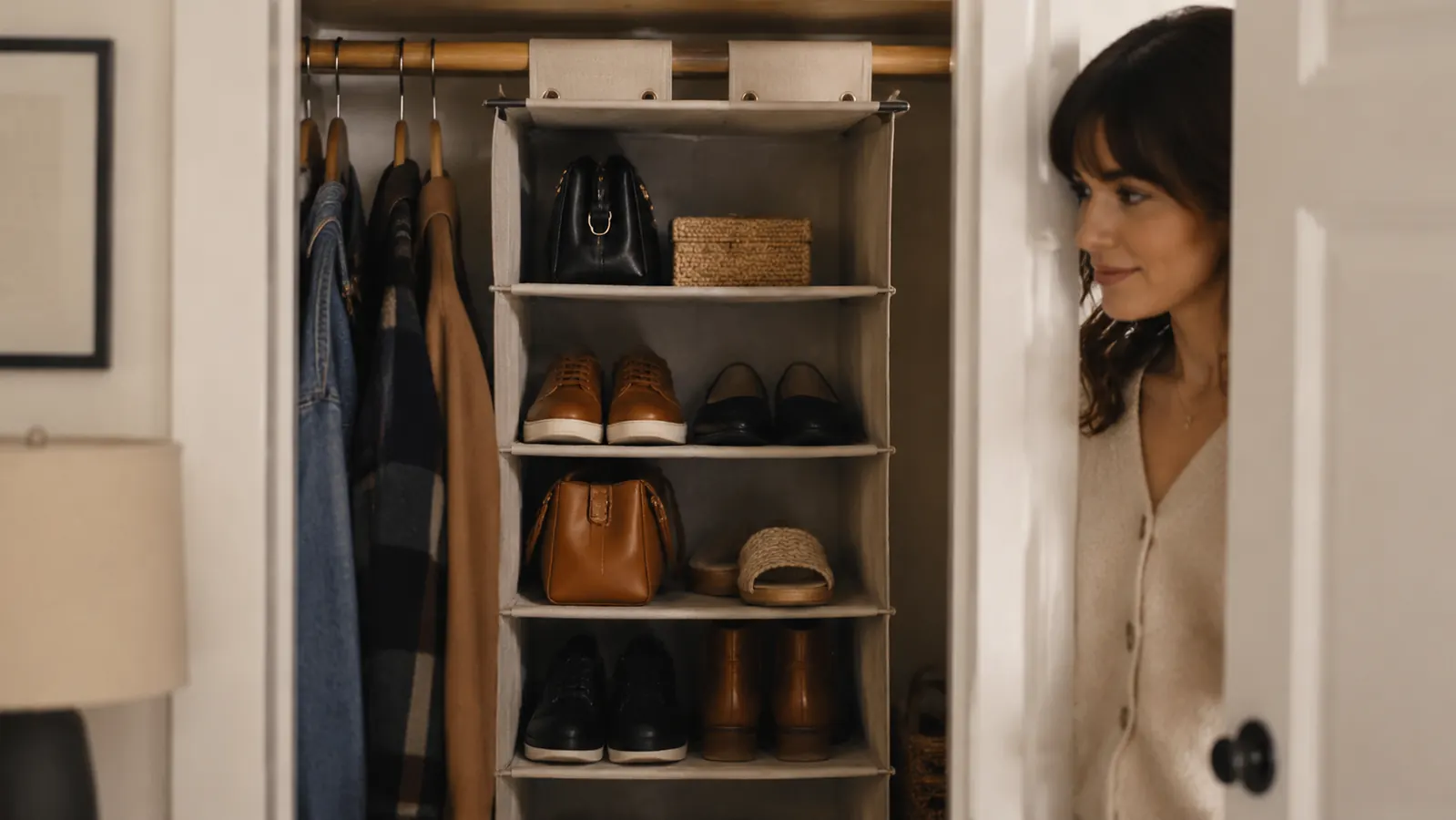
The hanging shelf organizer handles bigger shoes. Tall boots, work boots with thick soles, and chunky platform sneakers that would not fit a 4.5-inch-wide mesh pocket go right on the open shelves without any squeezing. If your household runs toward boots and bulkier footwear, the shelf organizer does that job without forcing you to shove shoes in at an angle. Metal-framed hanging shelf organizers also hold more total weight, which matters if you are storing heavier outdoor footwear.
The shelf organizer also works inside a reach-in or walk-in closet that already has a low rod. If you have a dedicated entryway closet with a rod, you can hang the shelf organizer and keep the back of the door free for a mirror or coat hooks. That separation of functions is genuinely useful in a home where the door space is already spoken for. The tradeoff is you need that rod, and many apartment entryway closets have only one high rod, not a lower secondary rod where a hanging organizer sits at a comfortable height.
If you have a door, this budget-friendly fix handles up to 24 pairs without touching the floor
The Amazon Basics 24-pocket over-door organizer is the default pick for renters. No drilling, no hardware, no clearance issues. It comes down in five seconds if you move.
Amazon Check Today's Price on Amazon →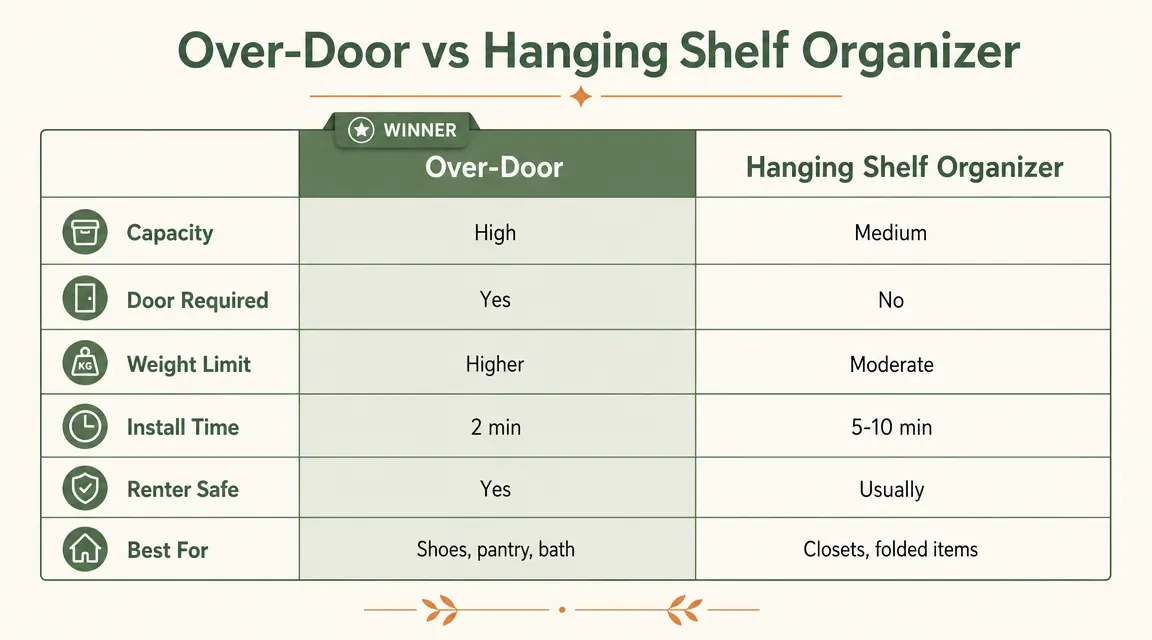
Who Should Buy Which
Buy the Amazon Basics over-door organizer if your shoes are mostly flats, low-top sneakers, sandals, or slip-ons and you want to get organized in the next ten minutes with zero tools. It fits any interior door, costs very little, and frees up every inch of floor space at the entryway. If you are in an apartment with no entryway closet at all, you can hang it on the back of a bathroom door or even the front door itself, though a front door that swings outward will not work with standard hooks.
Buy the hanging shelf organizer if your household wears a lot of boots or thick-soled shoes that do not fit standard pockets, or if you have a dedicated closet rod and prefer to keep the back of every door clear. You will pay more for a decent version with a stable frame, and you will need to measure the rod-to-floor drop to make sure the organizer fits without hitting the ground. It is a slightly better long-term solution for families with mixed footwear types, but it is more limiting for apartments without a proper closet.
The Fit Issue Nobody Mentions
The one consistent complaint I see on over-door organizers is the hook gap. The Amazon Basics hooks are designed for doors with a standard thickness of 1.375 inches. Most interior doors in apartments and newer construction fall in that range. But older doors with decorative molding at the top, or doors in some older buildings, run thicker. If the hooks do not clear the top of your door, the organizer will lean forward at an angle and feel unstable. Measure the top of your door before buying if your building is pre-1980. The hook gap on the Amazon Basics model is roughly 1.75 inches, which handles most standard doors with a little clearance.
Hanging shelf organizers have their own fit issue: rod diameter. Most hang on rods between 1 and 1.5 inches in diameter. If your closet has a thicker wooden rod, the strap may not close around it properly. Some shelf organizers use a hook bar instead of a strap, which is more forgiving across rod sizes. Check the mounting hardware specs before ordering.
The over-door organizer takes 60 seconds to install. In three apartments it has never left a mark on a door. That renter-safe track record is the real selling point, not just the price.
Real Capacity Numbers, Not Marketing Numbers
The Amazon Basics listing says 24 pockets. What that actually means in a real closet: the pockets are 4.5 inches wide and about 6 inches deep. A women's size 8 sneaker fits one per pocket but has to go in at a slight angle. Flats and sandals fit cleanly with room to spare. Men's size 11 running shoes will stretch the pockets and may not close at the top. My rule of thumb is that anything under a men's size 10 fits the Amazon Basics pockets without forcing. Above that, a hanging shelf organizer or a wider-pocket model is worth the upgrade.
A standard six-shelf hanging organizer with two-pair-per-shelf capacity holds 12 pairs. An eight-shelf model holds 16 pairs. The Amazon Basics 24-pocket organizer beats both on paper, but only if your shoes actually fit the pockets. The net effective capacity for a household with mixed shoe types might be closer to 16 pairs for the over-door model and 14 for a mid-range hanging shelf. They are closer than the marketing numbers suggest.
What I Would Skip
I would skip any over-door organizer with plastic hooks instead of coated metal hooks. Plastic hooks flex under load, which causes the organizer to swing forward every time you open the door. I would also skip hanging shelf organizers made entirely of fabric without a rigid frame on each shelf. The fabric-only models droop under the weight of heavier shoes and the shelves collapse inward, which makes retrieval frustrating. If you are going the hanging shelf route, spend the extra few dollars for a version with metal rods or a solid plastic shelf insert to keep each level flat.
For a deeper look at how the Amazon Basics over-door model holds up after heavy use, including the hook wear and pocket stretching timeline, see the honest review covering the details most listings skip.
Budget-friendly, renter-safe, and works on any interior door
The Amazon Basics 24-pocket over-door shoe organizer is the straightforward pick for clearing entryway floors without spending a weekend on a project. No tools, no damage, no measuring required.
Amazon Check Today's Price on Amazon →